Source Motorcycle Fuel Cap Stickers for Tank Protection, Custom Branding, and Model Fit
Compare 30 motorcycle fuel cap stickers from verified suppliers offering soft rubber and PVC materials. Buyers can evaluate options for tank protection, custom logos, and fitment across different motorbike models with varying MOQs and lead times.
Key considerations
Products List






Comprehensive Sourcing Guide
Strategic Sourcing Guide for Motorcycle Fuel Cap Stickers
Understanding Product Variants and Technical Specifications
The market for motorcycle fuel cap stickers presents a diverse array of options, primarily distinguished by material composition, dimensional constraints, and functional design. When evaluating potential inventory, buyers must first recognize that "motorcycle fuel cap stickers" are not a monolithic product category but rather a collection of specialized components designed to protect the fuel tank area while offering aesthetic customization. The core technical specification often revolves around the material used, with observed market data indicating a split between soft rubber and PVC constructions. Soft rubber variants, often cited in product listings as providing a tactile, non-slip surface, are typically engineered to absorb minor impacts and prevent scratches on the fuel tank surface. Conversely, PVC-based options are frequently highlighted for their durability and resistance to environmental degradation, offering a glossy finish that mimics high-end decals.
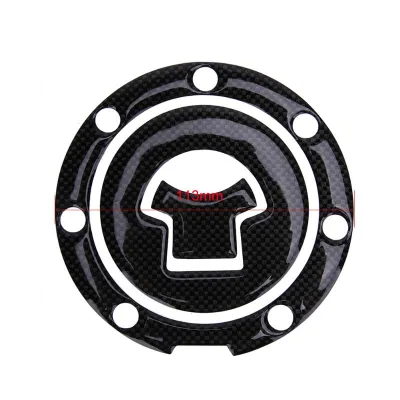
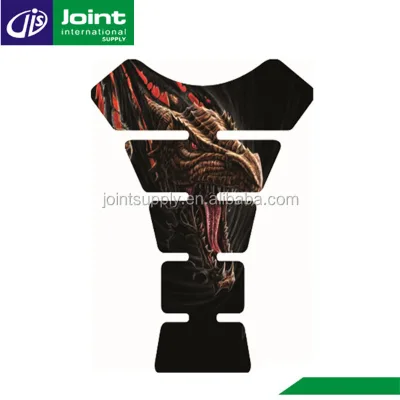
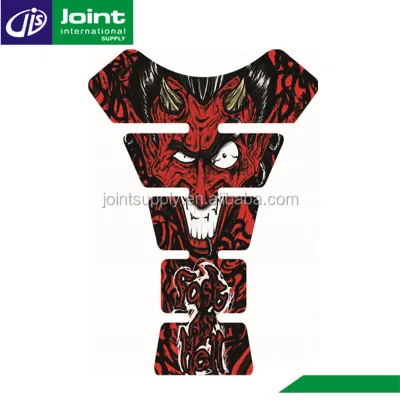
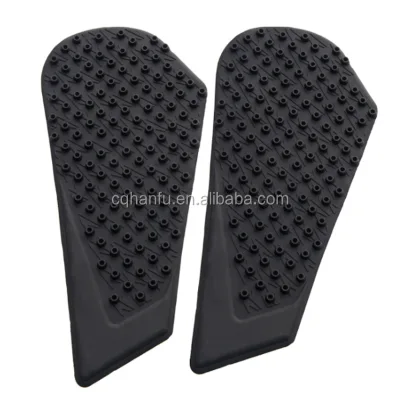
Dimensional precision is another critical technical parameter. While some suppliers offer "Custom Size" options to accommodate specific motorcycle models, others provide standardized dimensions, such as the 1.13 cm diameter observed in certain circular designs. The shape of the sticker is equally variable; while circular formats are common for direct fuel cap coverage, other designs may feature elongated or irregular shapes to cover broader tank areas, functioning as "Motorcycle Tank Protector Sticker Pads." The adhesive backing is a crucial technical detail, with "3m" branded adhesive being a specific attribute noted in product descriptions, suggesting a high-tack bonding agent intended for long-term retention despite exposure to fuel vapors and temperature fluctuations. Buyers should verify that the adhesive is compatible with the specific surface finish of the motorcycle, whether matte, gloss, or textured, to ensure a bubble-free application that does not leave residue upon removal.
Compliance, Certification, and Material Safety Standards
In the realm of B2B procurement, verifying compliance and material safety is paramount, particularly for products that will be in close proximity to fuel systems and exposed to the elements. The primary certification observed in the current market data is RoHS (Restriction of Hazardous Substances). This certification indicates that the product adheres to strict limits on the use of specific hazardous materials, such as lead, mercury, cadmium, and certain flame retardants. For buyers targeting European or North American markets, the presence of RoHS certification is often a baseline requirement for market entry. However, it is essential to treat this as an observation of specific listings rather than a universal guarantee for all products in the category. Procurement teams must request current, valid test reports from the supplier to confirm that the specific batch of stickers being ordered meets the latest RoHS directives.
Beyond RoHS, the material standard itself is a critical compliance factor. The product descriptions frequently reference "rubber" as a standard material classification. While this suggests a flexible, durable polymer, buyers must verify the specific chemical composition to ensure it does not contain phthalates or other plasticizers that could degrade over time or react with fuel. The "Eco-friendly" feature mentioned in several product attributes further implies a commitment to sustainable manufacturing practices, though this term is not legally defined without third-party verification. Buyers should inquire about the supplier's adherence to broader environmental standards, such as ISO 14001, to ensure that the "Eco-friendly" claim is backed by a robust management system. Additionally, the "A class quality" designation found in some listings is a subjective marketing term rather than a standardized metric. Procurement professionals should define their own quality acceptance criteria, focusing on tensile strength, adhesive shear strength, and UV resistance, rather than relying solely on the supplier's internal quality grading.
Cost Drivers and Pricing Structure Analysis
The pricing structure for motorcycle fuel cap stickers is influenced by a complex interplay of material costs, customization levels, and order volume. The observed price range in the market spans from $0.01 to $10 per unit, a variance that reflects the significant differences in product complexity and order scale. At the lower end of the spectrum, prices are likely driven by high-volume production of standard PVC or rubber stickers with minimal customization. These items often utilize automated manufacturing processes and generic designs, allowing for economies of scale that drive unit costs down. Conversely, prices approaching the upper limit of the observed range are typically associated with custom logos, specialized materials like high-grade soft rubber, or small-batch orders that do not benefit from mass production efficiencies.
Order volume is perhaps the most significant cost driver in this sector. The Minimum Order Quantity (MOQ) varies widely, with observed ranges spanning from 5 units to over 6,600 units. Some suppliers set an MOQ of 50 pieces, catering to small retailers or prototyping needs, while others require orders of 500 or 1,000 pieces to activate their most competitive pricing tiers. The "Supply Ability" of the manufacturer also plays a role in cost stability; suppliers capable of producing 5,000 pairs per week or 10,000 pieces per month can often offer more consistent pricing and better lead times compared to smaller operations. Buyers must carefully balance their inventory requirements against the MOQ to avoid tying up excessive capital in stock that may not sell quickly. Furthermore, the cost of customization, such as the "Custom Logo" and "OEM" services offered by many suppliers, adds a layer of expense that must be factored into the total landed cost. This includes setup fees for molds or printing plates, which are amortized over the order quantity.
Typical Applications and Market Fit
The primary application for motorcycle fuel cap stickers is functional protection, specifically designed to shield the fuel tank from scratches, abrasion, and UV damage. The product attributes explicitly state the function as "Protect Fuel Tank," indicating that these stickers serve as a sacrificial layer that absorbs wear and tear, preserving the underlying paintwork. This is particularly relevant for off-road and motocross applications, where the "Motorcross Bike Motorcycle Decal Stickers" are designed to withstand the rigors of rough terrain and potential debris impact. The "Suit Different Models Motorbikes" attribute suggests a high degree of versatility, allowing a single SKU to be used across a wide range of motorcycle types, from street bikes to dirt bikes.
However, the aesthetic application is equally important. These stickers are often used as a branding tool for riders and manufacturers alike. The availability of "Custom Logo" and "OEM" options allows brands to create unique visual identities for their vehicles. The "Color: more color" and "Color: As photos" attributes highlight the importance of visual customization in this market. Buyers should consider the target demographic when selecting products; for instance, riders seeking a rugged, utilitarian look may prefer the matte finish of soft rubber, while those focusing on street performance might opt for the glossy, vibrant appearance of PVC. The "Easy to install" feature, which requires no additional tools, makes these products accessible to end-users who wish to perform the installation themselves, expanding the potential market beyond professional workshops to individual consumers.
Supplier Evaluation and Operational Capabilities
Evaluating a supplier for motorcycle fuel cap stickers requires a deep dive into their operational capabilities and logistical infrastructure. The "Place of Origin" is consistently listed as China, with specific mentions of Zhejiang province, a region known for its robust manufacturing ecosystem. This geographic concentration often implies a mature supply chain for rubber and plastic products, but it also necessitates rigorous due diligence regarding the specific factory's capacity and reliability. Buyers should verify the "Port of dispatch," which includes major hubs like Ningbo, Shanghai, and Shenzhen. These ports offer extensive shipping connectivity, but the specific port chosen can impact lead times and freight costs depending on the buyer's location.
The "Supply Ability" metrics, such as 5,000 pairs per week or 10,000 pieces per month, provide a baseline for assessing whether a supplier can meet demand during peak seasons. However, these figures should be treated as maximum theoretical capacities rather than guaranteed daily outputs. Buyers must inquire about the supplier's current production load and their ability to scale up in response to sudden order spikes. The "Packaging Details" provide insight into the supplier's attention to logistics; for example, a carton size of 50x50x45 cm containing 300 pairs with a gross weight of 20 kg suggests a standardized packing method that optimizes container space. Buyers should ensure that the packaging, whether "OPP Bag" or "Blister," protects the product during transit and meets any specific retail requirements they may have.
Quality Control and Long-Term Procurement Considerations
Establishing a robust quality control (QC) protocol is essential for maintaining product integrity in the motorcycle accessories market. The "Warranty" periods observed, ranging from three months to one year, offer a starting point for defining quality expectations, but buyers should not rely solely on these terms. Instead, they should implement pre-shipment inspections that test for adhesion strength, color fastness, and dimensional accuracy. The "Single gross weight" and "Single volume" attributes, while sometimes listed as zero in product descriptions, should be verified to ensure accurate shipping calculations and inventory management.
Long-term procurement considerations involve building a resilient supply chain that can adapt to market changes. The "Customization: Available" and "OEM: Acceptable" attributes indicate that suppliers are willing to collaborate on product development, which is a valuable asset for buyers looking to differentiate their offerings. However, this requires clear communication of specifications and a shared understanding of quality standards. Buyers should also consider the "Feature: Eco-friendly" aspect as a potential differentiator in a market increasingly sensitive to environmental impact. Establishing a long-term partnership with a supplier who can consistently deliver RoHS-compliant, high-quality stickers will reduce the risk of product recalls and customer dissatisfaction. Finally, buyers must remain vigilant regarding the "Model Number" variations, such as XUEYAN1018 or M92700020, ensuring that the specific model ordered matches the intended application and that any changes in model numbers do not affect compatibility with existing motorcycle fleets.
Comparative Analysis of Product Attributes
To facilitate decision-making, the following table summarizes key attributes observed across different product listings, highlighting the variations buyers may encounter.
| Attribute | Observation A (Soft Rubber Variant) | Observation B (PVC Variant) | Observation C (Custom/General) |
|---|---|---|---|
| Material | Soft Rubber | PVC | Rubber / PVC |
| Size | 1.13 cm (Circle) | Custom Size | Variable |
| MOQ | 50 Pcs | 500 Pcs | 1000 Pcs |
| Adhesive | 3m (Implied) | Standard | 3m |
| Warranty | One Year | 3 Months | Variable |
| Packaging | OPP Bag | Blister | Blister or Bag |
| Certification | RoHS | RoHS | RoHS |
| Supply Ability | 5000 pairs/Week | 10000 pieces/Month | Variable |
| Origin | China (Zhejiang) | China | China |
This comparison underscores the importance of aligning product specifications with specific business needs. A buyer requiring high-volume, low-cost inventory might prioritize the PVC variant with a higher MOQ, while a buyer focusing on premium, durable products might opt for the soft rubber option with a longer warranty period. By carefully analyzing these attributes, procurement professionals can make informed decisions that balance cost, quality, and operational efficiency.
FAQs
What material options exist for motorcycle fuel cap stickers?
The available materials include soft rubber and PVC constructions. Soft rubber variants absorb impacts while PVC offers durability and a glossy finish. Buyers should verify the specific chemical composition to ensure compatibility with fuel systems and surface finishes.
Which certifications are typically required for these stickers?
RoHS certification is the primary standard observed in the market data. This indicates adherence to limits on hazardous substances like lead and mercury. Buyers must request current test reports to confirm specific batches meet the latest directives for European or North American entry.
How does the minimum order quantity affect pricing?
Minimum order quantities range from 50 to over 6,600 units depending on the supplier. Lower prices are driven by high-volume production of standard designs, while custom logos or small batches incur higher costs. Buyers must balance inventory needs against these volume thresholds to manage capital effectively.
Can suppliers provide custom logos and OEM services?
Yes, customization and OEM services are widely accepted by manufacturers. Suppliers offer custom logos and specific packaging requirements to help brands create unique identities. This adds to the total landed cost due to setup fees for molds or printing plates amortized over the order quantity.
Where are the primary manufacturing locations for these products?
The place of origin is consistently listed as China, with specific mentions of Zhejiang province. Major ports for dispatch include Ningbo, Shanghai, and Shenzhen. Buyers should verify the specific factory's capacity and reliability within this mature manufacturing ecosystem.
What is the typical supply ability for motorcycle tank stickers?
Supply abilities vary, with some suppliers offering 5,000 pairs per week or 10,000 pieces per month. These figures represent maximum theoretical capacities rather than guaranteed daily outputs. Buyers should inquire about current production loads to ensure demand can be met during peak seasons.